Use Mary Mo books, gentle routines, cozy spaces, and small rewards to make reading feel more playful for children.
This guide supports parents who want practical reading ideas without turning story time into homework.
Good fits on this page
- Reading routines
- Cozy corners
- Book rewards
- Family reading
Start with Mary Mo books
Visit the Mary Mo book catalog to browse current titles, formats, Kindle Unlimited availability, and Amazon marketplace links.
FAQ
Are these books available on Amazon?
Mary Mo book pages link to available Amazon marketplaces and show Kindle Unlimited where it is listed.
Will this page include more recommendations?
Yes. This page is structured so more books, topic notes, and reader-friendly recommendations can be added over time.
Practical ideas for making reading fun
# How to Make Reading Time Fun for Reluctant Readers
When a child avoids reading, the answer is rarely to make reading feel more serious. It often helps to make the next reading moment smaller, warmer, and easier to choose. A child does not need to sit still for a long time or finish a book in one go to build a positive relationship with stories.
These ideas are for families with children around ages 4–8. Take what fits your child, leave what does not, and remember that interest can grow through many kinds of reading: listening, looking at pictures, retelling, acting out a scene, or choosing a book connected to a favorite subject.
Start with the child’s interest, not a reading level
Children are more likely to open a book when the topic already matters to them. A child who loves rockets may want a space adventure. A child who spends all afternoon drawing may enjoy an art or creativity story. A child who makes jokes at dinner may like a funny mystery.
Instead of asking, “What should you read?” try asking:
- Do you want a story about animals, magic, space, or making things?
- Should we choose something silly, cozy, exciting, or curious?
- Would you like to read, listen, or look at the pictures together?
Choice gives children a little ownership before the reading even begins.
Keep the first reading moment short
Five calm minutes can be more useful than twenty frustrating ones. Choose one small stopping point: a page, a picture, a scene, or a chapter opening. End while the child is still interested rather than waiting until they are tired.
You can say, “Let’s read until we find out what happens next,” or “Let’s see what this character notices.” A small purpose makes a short reading moment feel complete.
Read in unusual places
Changing the setting can make a familiar activity feel new. Try a blanket fort, a sofa corner, the floor beside a sunny window, or a quiet spot before a family outing. The place does not need to be elaborate. A pillow and a small lamp can be enough to signal that this is a special reading moment.
Keep comfort practical: choose a safe, well-lit space and do not make a new setup feel like a requirement. The goal is ease, not an Instagram-perfect reading nook.
Let children move while they listen
Some children listen better when their hands or bodies are busy. They might draw a character, build with blocks, hold a soft toy, or act out a quiet part of the story. Movement is not always a sign that a child is not paying attention.
After a short section, ask one simple question:
- What do you think will happen next?
- Which part would you want to draw?
- If you were there, what would you do?
This gives the child a way to respond without turning reading into a quiz.
Make rereading welcome
Adults sometimes worry when a child chooses the same book again and again. Rereading is often useful. It helps children notice details, anticipate favorite moments, and feel confident because they know what is coming.
You can make a familiar story feel slightly different by changing who reads a character’s voice, pausing to notice a picture, or asking the child to retell one scene in their own words.
Pair stories with small real-life activities
A story can become a starting point for something simple:
- after a gardening book, look for leaves outside;
- after a robot story, build a creation from blocks;
- after a kindness story, make a friendly note for someone;
- after a mystery, hide a small object and create clues;
- after a magic story, invent a magician name.
The activity does not need to be elaborate. A connection between a story and a child’s own day can make the book easier to remember.
Avoid turning every book into homework
It is tempting to ask many questions or look for a lesson in every page. Some children enjoy that, but others need reading to stay restful. Try to follow the child’s energy. One observation, one laugh, or one favorite picture can be enough.
If a child says they do not like a book, believe them. Put it aside and choose another topic later. A book that does not fit today may fit at another time.
Make family reading visible
Children notice what adults do. Let them see books, magazines, recipes, or instructions being used as part of ordinary life. Talk naturally about something interesting you read, without making it a lesson.
You can also create a tiny routine: a book in the car, a story after bath time, a short reading break after lunch, or a quiet page before bed. Regularity helps, but the routine should be flexible enough to survive busy days.
Find a book that matches the moment
Find a Mary Mo book that matches the moment


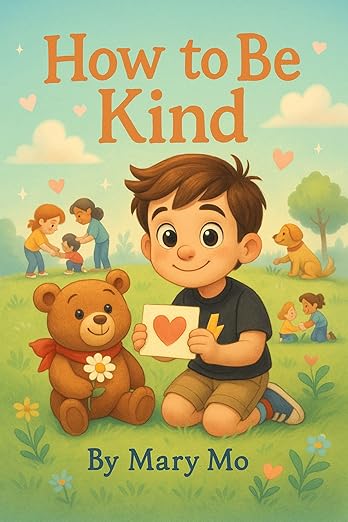
Kindness / Social skills
How to Be Kind
Mary Mo book for 3–8 readers. Topic: Kindness / Social skills.
FAQ
What should I do if my child refuses to read?
Lower the pressure. Offer a very short shared reading moment, let the child choose the topic or format, and stop before frustration grows. If concerns about reading persist, speak with the child’s teacher or an appropriate professional.
Is listening to a story still reading time?
Listening to stories can support attention, vocabulary, imagination, and enjoyment of books. It can be a helpful part of a child’s reading routine alongside looking at print and pictures together.
How often should we read together?
There is no perfect number. A short, pleasant routine that works for your family is more valuable than an ambitious plan that creates stress.